
Easing Painful Sex: Discover the Potential Benefits of Vibration Therapy

Key Takeaways
- Vaginismus involves involuntary tightening of the pelvic floor muscles, making penetration painful or impossible. The muscles struggle to relax on command.
- Vibration therapy may help by calming muscle tension, improving blood flow, reducing pain sensitivity, and making dilation therapy feel more manageable (Dubinskaya et al., 2023).
- Consistency is a critical factor in how quickly progress happens — and when therapy is less stressful, it is easier to stay on track with regular sessions (Wallace et al., 2019).
- In a recent clinical study of Milli users, 80% used the vibration option at least half the time, and 57% reported reduced anxiety related to sex after 3 months (Materna Medical, n.d.).
- A tool that combines gradual dilation with integrated vibration simplifies the process and reduces both physical and emotional stress.
Table of Contents
Understanding Vaginismus and Painful Sex
Living with tight pelvic floor muscles — also known as vaginismus — and pain during sex (dyspareunia) can feel tough and lonely. Everyday things, like going to the doctor or being close with a partner, can turn into stressful experiences. For many who face this kind of pain, finding relief can seem almost impossible.
Vaginismus (vaj-uh-niz-muhs) is a genito-pelvic pain penetration disorder that may cause painful vaginal penetration. It is thought to be caused by involuntary contraction of the pelvic floor muscles (Cleveland Clinic, 2024). If you are managing vaginismus, you might hear clinicians or physical therapists describe your pelvic floor as “hypertonic” — that is just a way of saying the muscles are tightly contracted and have difficulty relaxing.
Dyspareunia is an umbrella term for painful sex (Cleveland Clinic, 2024). Vaginismus is often associated with painful intercourse, but it can cause pain or discomfort with any type of vaginal penetration, such as with a finger, speculum, or tampon. Dyspareunia can also occur for a variety of other reasons, often without vaginismus.
Doctors often suggest dilator therapy to help relax and gently stretch tight muscles, but for some, this approach can feel uncomfortable or even too clinical. Vibration therapy has increasingly been recommended to make the process easier (Dubinskaya et al., 2023). Vibration can help reduce muscle tension, improve blood flow, and make therapy feel more natural and manageable.
Why Vibration Therapy Can Help with Tight Muscles and Pain
When people think about vibration therapy, they may picture pleasure-related devices. However, vibration has proven benefits beyond pleasure — it can support muscle relaxation, improve circulation, and reduce pain (Rullo et al., 2018). Gentle vibration has a calming effect on tight pelvic muscles, which is why it is often recommended for people who experience pain during sex (Dubinskaya et al., 2023).
Vibration can lower the body’s sensitivity to pain, a process called vibratory analgesia (Arciszewski & Ekholm, 2022). This means that with regular use, vibration therapy may help ease pain in sensitive areas. For people experiencing painful sex due to tight vaginal muscles, these effects may make vibration a useful tool — helping to calm tense muscles, improve relaxation, and make each session a bit easier.
How Vibration Therapy Supports Dilation Therapy
Using dilators can be effective for people with tight pelvic floor muscles (Wallace et al., 2019), but the experience can sometimes feel clinical or uncomfortable. Adding vibration therapy to the routine may improve the experience by helping the body feel more relaxed and receptive (Dubinskaya et al., 2023). Here are the main ways vibration therapy may help:
1. Improves Blood Flow, Which Helps Muscles Relax Naturally The gentle motion from vibration improves blood flow to the area, making tight muscles feel softer and more relaxed (Rullo et al., 2018). This increase in circulation also promotes natural lubrication, which can make dilation feel smoother and less uncomfortable.
2. Makes Pain Less Intense The desensitizing effect of vibration therapy can help reduce the pain that often comes with tight pelvic muscles (Arciszewski & Ekholm, 2022). By lowering the body’s response to pain, vibration allows for a more comfortable experience with each session. Over time, the body gradually adjusts to the sensation without triggering as much discomfort.
3. Combines the Benefits of Two Therapies Some people find it challenging to use both a dilator and a separate vibrating device, especially when already dealing with pain and tightness. A tool that combines vibration with dilation simplifies the process — bringing together the muscle relaxation benefits of both therapies in a way that is easier to manage (Dubinskaya et al., 2023).
Why Consistency Matters — and How Vibration Helps You Stay on Track
Consistency is a critical factor in how quickly progress happens with dilation therapy. Short, regular sessions over time are more Consistency is a critical factor in how quickly progress happens with dilation therapy (Wallace et al., 2019). Short, regular sessions over time are more effective than infrequent attempts. But staying consistent is easier said than done — especially when therapy feels stressful, uncomfortable, or intimidating.
This is exactly where integrated vibration makes a meaningful difference. When therapy feels less threatening physically and emotionally, it becomes easier to show up for it regularly. Reducing the stress of each session — both the physical tension and the anxiety around penetration — is what supports the kind of steady, gradual progression that leads to real outcomes.
The clinical data supports this. In a recent clinical study of users of the Milli expandable vaginal dilator with optional integrated vibration (Materna Medical, n.d.):
- 80% used vibration at least half the time — suggesting that when vibration is built in and easy to access, people choose to use it
- 57% reported reduced anxiety related to sex after 3 months
- 68% reported intercourse was more comfortable after 3 months
- 85% made meaningful progress toward intercourse after 3 months
These findings reflect the connection between emotional comfort and physical progress. When anxiety decreases, the cycle of muscle guarding and fear begins to ease — and consistent therapy becomes more achievable, not less.
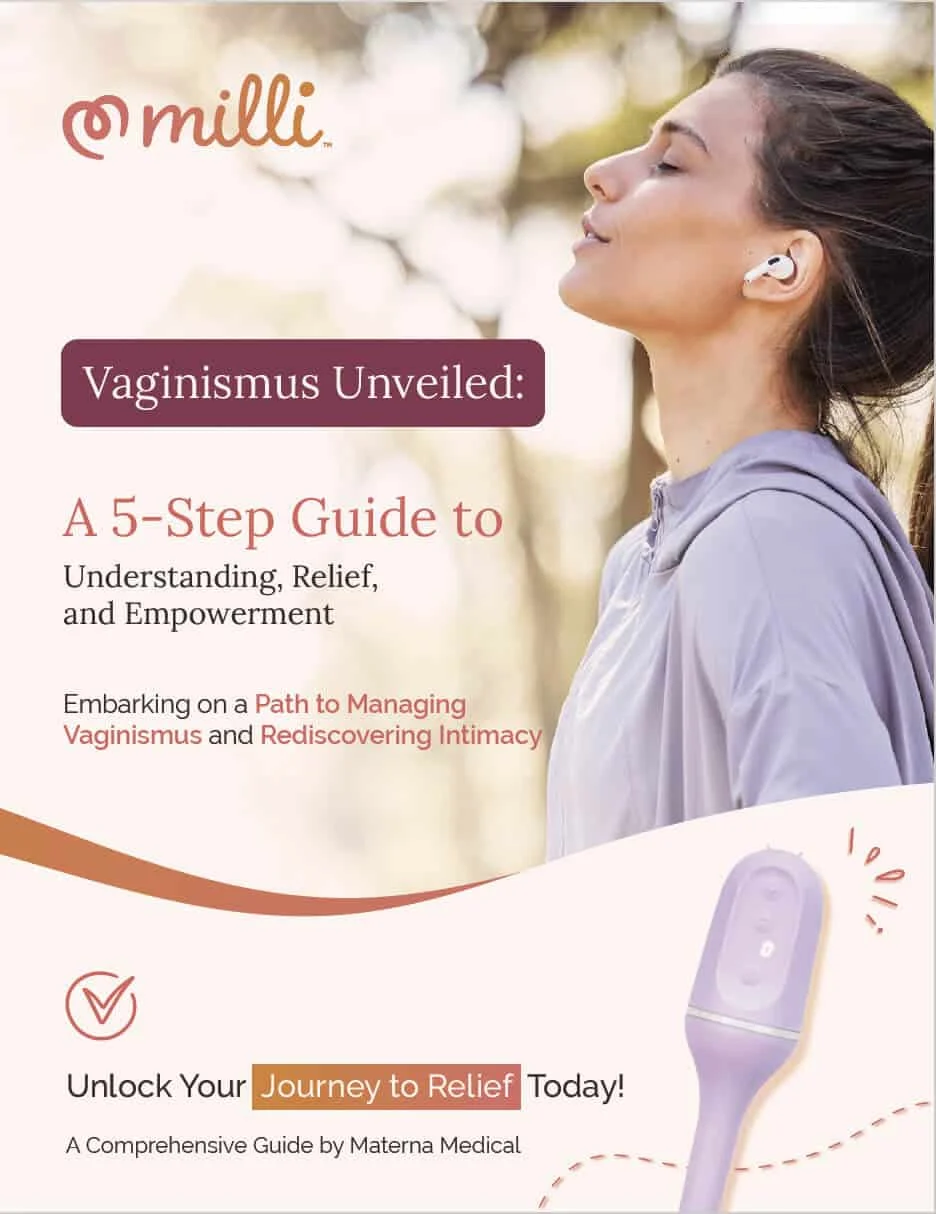
Milli is a precision-engineered vaginal dilator designed to reduce both the physical and emotional stress of dilation therapy. Unlike traditional static dilator sets, Milli expands gradually with patient-controlled precision — eliminating the need to remove and reinsert progressively larger sizes. The optional integrated vibration is designed specifically to support muscle relaxation during dilation, making it possible to benefit from both therapies in a single, manageable step. It can be used independently at home or alongside pelvic floor physical therapy (Wallace et al., 2019).
“In a recent clinical study of Milli users, 80% used vibration at least half the time — and 57% reported reduced anxiety related to sex after just 3 months.”
Tips for Using Vibration and Dilation Therapy
If you are curious about trying vibration therapy alongside dilation, here are some helpful tips to get the best results and make your experience more comfortable:
- Start with small steps. If you are new to dilation, begin with the smallest comfortable size and let your body adjust before moving up. Take it slow, giving your muscles time to adapt.
- Use a gentle, body-safe lubricant. A high-quality lubricant can make the process feel smoother and reduce friction. Look for one that is safe for vaginal health and supports natural pH balance.
- Listen to your body. Go at your own pace and take breaks if you need to. Each session should feel like progress, not pressure.
- Stay consistent. Regular use is key to making dilation therapy effective (Wallace et al., 2019). The more consistently you practice, the more your muscles will adapt — which helps reduce pain over time.
- Seek professional support. Do not hesitate to reach out to a healthcare provider or pelvic floor therapist for guidance. They can help you find the right approach and support your progress.
Finding Relief with a Simple Approach
vibration therapy to your routine can make a meaningful difference. Vibration helps calm muscles, improve blood flow, and desensitize painful areas — making dilation feel more natural and comfortable over time (Dubinskaya et al., 2023). With patience and consistency, vibration therapy may help ease your journey and make real progress possible.
Best of all, you do not need multiple devices. Milli is a tool that combines both dilation and vibration, letting you likely benefit from both therapies without having to manage separate steps — keeping things simpler, more private, and more in your control.
FAQs
Can vibration therapy help with vaginismus?
Vibration therapy may help by reducing muscle tension, improving blood flow, and lowering the body’s sensitivity to pain in the pelvic area (Arciszewski & Ekholm, 2022). When used alongside dilation therapy, it can make sessions feel more comfortable and manageable, which supports more consistent practice over time (Wallace et al., 2019).
Is it safe to use vibration therapy for painful sex?
For most people, gentle vibration is considered safe and well-tolerated (Dubinskaya et al., 2023). It is always a good idea to discuss any new therapy with your healthcare provider or pelvic floor physical therapist, particularly if you have an underlying medical condition contributing to your pain.
Do I need a separate vibrating device and a dilator?
Not necessarily. Milli is a tool that combines both dilation and vibration, letting you likely benefit from both therapies without having to manage separate steps — keeping things simpler, more private, and more in your control.
How often should I use vibration and dilation therapy?
Consistency is a critical factor in progress (Wallace et al., 2019). Most dilation therapy protocols recommend sessions several times per week. Short, regular sessions are generally more effective than longer, infrequent ones. Your healthcare provider or pelvic floor therapist can help you find a schedule that works for your specific situation.
What does the research say about vibration therapy for pelvic floor conditions?
A 2023 systematic review found that vibration therapy showed promising results for a range of pelvic floor outcomes (Dubinskaya et al., 2023). In a recent clinical study of Milli users, 80% used integrated vibration at least half the time, 57% reported reduced anxiety related to sex after 3 months, and 85% made meaningful progress toward intercourse within 90 days (Materna Medical, n.d.).
Sources
- Arciszewski, T., & Ekholm, S. (2022). The analgesic effect of localized vibration: A systematic review. Part 1: The neurophysiological basis. European Journal of Physical and Rehabilitation Medicine, 59(1), 98–108. https://doi.org/10.23736/S1973-9087.22.07572-6
- Cleveland Clinic. (2024). Dyspareunia (painful intercourse): Causes and treatment. https://my.clevelandclinic.org/health/diseases/12325-dyspareunia-painful-intercourse
- Dubinskaya, A., Horwitz, R., Scott, V., Anger, J., & Eilber, K. (2023). Is it time for doctors to Rx vibrators? A systematic review of pelvic floor outcomes. Sexual Medicine Reviews, 11(1), 15–22. https://doi.org/10.1093/sxmrev/qeac008
- Materna Medical. (n.d.). POMPOM clinical study results (Data on file, KEY0054 and supporting references KEY0050–KEY0053).
- Rullo, J. E., Lorenz, T., Ziegelmann, M. J., Meihofer, L., Herbenick, D., & Faubion, S. S. (2018). Genital vibration for sexual function and enhancement: A review of evidence. Sexual and Relationship Therapy, 33(3), 263–274. https://doi.org/10.1080/14681994.2017.1419557
- Wallace, S. L., Miller, L. D., & Mishra, K. (2019). Pelvic floor physical therapy in the treatment of pelvic floor dysfunction in women. Current Opinion in Obstetrics and Gynecology, 31(6), 485–493.
 About Milli