
Understanding What’s Happening in Your Body
For many women, symptoms like painful sex, pelvic muscle tightness, vaginal dryness, or difficulty with penetration can feel confusing and isolating. These symptoms can come from a range of different causes — and many women have more than one contributing factor at the same time.
The topics in this section cover some of the most common reasons women experience these symptoms: vaginismus (involuntary pelvic floor muscle tightness), painful sex (dyspareunia), and the specific hormonal and physical changes of menopause and postpartum recovery.
These topics overlap. Menopause can lead to vaginismus. Postpartum pain can become vaginismus. Painful sex is the umbrella symptom across all of them. Understanding the differences — and the connections — can help you identify what’s going on and what to do about it.
Whatever you’re experiencing, you’re not alone — and meaningful relief is possible.
Explore the Topics in This Section
Each card below leads to a dedicated page with deeper information, treatment options, and resources.





Not Sure Where to Start?
If you’re not sure which of these topics applies to you, you’re not alone. Symptoms often overlap, and women frequently experience more than one of these conditions at the same time. A conversation with a healthcare provider is the clearest path to a diagnosis.
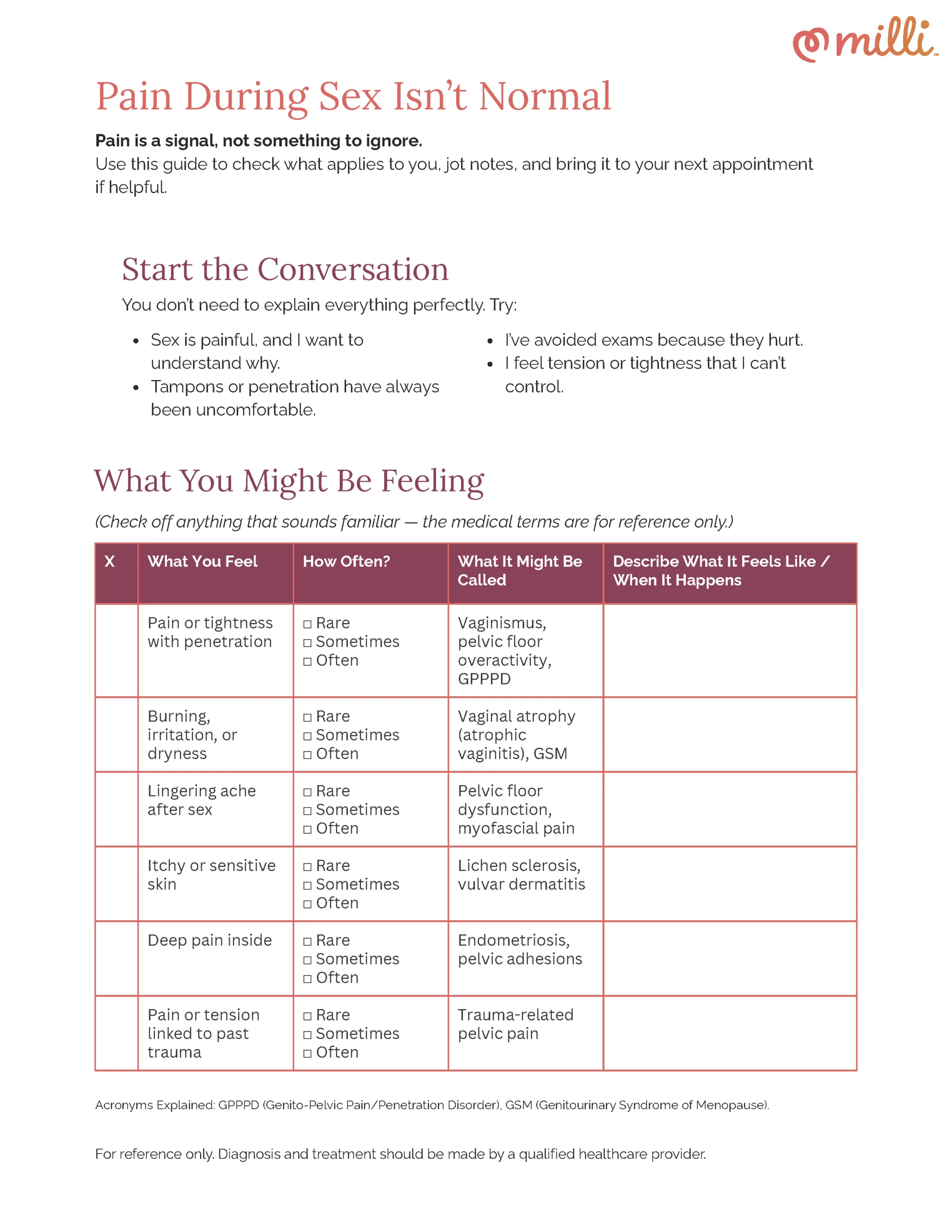
In the meantime, here are some starting points: If pain with penetration is your main symptom, start with the Painful Sex page — it covers the full range of possible causes. If you’re in perimenopause, menopause, or breastfeeding, the Menopause or Postpartum pages focus on the hormonal changes most relevant to those stages of life. If you’ve experienced involuntary pelvic floor tightening regardless of cause, the Vaginismus page covers this specific condition in depth. And for a head start on talking to your provider, download the Provider Discussion Guide below.
Whatever brings you here, taking the first step to understand your body is already meaningful progress.