
Maintaining Sexuality After Menopause

Key Takeaways
- Menopause brings hormonal shifts that can affect sexual desire, arousal, and comfort — but these changes don’t have to be permanent or define your sex life.
- Taking more time, being present, communicating openly, and redefining what sex means to you are practical steps that can make a real difference.
- Vaginal dryness is common after menopause and can contribute to painful sex. A quality lubricant is a good first step.
- For some women, anticipation of pain can cause the pelvic floor muscles to tighten involuntarily — a condition called vaginismus — which can further compound discomfort.
- Dilation therapy can be a helpful tool when pelvic muscle tightness is part of the picture. A gradual, consistent approach is what makes it effective.
Table of Contents
You’ve still got it!
So, you’re navigating the wild ride that is menopause, huh? It’s like the ultimate plot twist in the story of your body. But here’s the thing: just because your hormones are throwing a bit of a tantrum doesn’t mean your sex life has to go on hiatus. In fact, with a few tweaks and the right mindset, you can keep the fire burning bright — and have some fun along the way.
How Does Menopause Affect Sexual Health?
Can we be real for a moment? Menopause can feel like your body suddenly decided to play by a whole new set of rules. Hormonal shifts can lead to some unexpected changes in the vaginal area — like dryness, thinning walls, and yes, a few more painful moments than we’d like. But when you begin to understand these changes, you are taking the first step toward taking back control. It is normal to feel out of sorts, and you are not alone.
Why Am I Losing My Sex Drive?
Between the hot flashes, mood swings, and the occasional sleepless nights, it’s no wonder your sex drive has taken a break. Hormonal changes can be a big part of that — but stress, body image, and fatigue can also play a role. It is not all in your head, and you are not alone.
How to Increase Sexual Desire After Menopause
Here are some practical approaches that many women find helpful:
- Take Your Time
- You know the saying, “good things come to those who wait”? It applies here too. Rushing into things can lead to discomfort, so give yourself permission to slow down. Foreplay is part of the main event — not just a warm-up. Take your time, explore each other’s bodies, and let your comfort and pleasure take center stage.
- Be Present
- We have all been there: your mind is racing with to-do lists, and suddenly sex feels like another chore. Being fully present can make all the difference. Take a deep breath, let go of the stressors of the day, and focus on the moment. Reconnecting with your body and your partner starts with just being there.
- Communicate Openly
- Communication is not always sexy, but it is necessary. As our bodies change, so do our needs. Talk to your partner about your challenges, what positions feel better, what you enjoy, and your fears around sex. Having a supportive partner and open dialogue always goes a long way in intimacy, sexual or otherwise.
- Explore Solo Play
- Who says you can’t play alone? Spending time with yourself and exploring your own sexual pleasure is a great way to discover what feels good, and it can be a confidence booster. Self-exploration can help you increase desire, identify what works for you, and communicate more effectively with your partner.
- Exercise for Better Sex
- Cardiovascular fitness is often linked to better health, metabolism, and sex life. Sex can be an endurance sport, and being in good shape helps. Whether it’s yoga, a brisk walk, or whatever moves you enjoy — get moving. Your body will thank you.
- Redefine Sex
- Sex can be whatever you want it to be. The idea that “sex equals penetration” is limiting and outdated. There are so many ways to connect intimately — massaging each other, sensual baths, kissing, snuggling, oral sex, and more. Talk to your partner and explore what feels meaningful and pleasurable for both of you.
Understanding Vaginal Dryness and Vaginismus
Vaginal dryness is one of the most common changes linked to perimenopause and menopause. As estrogen levels drop, vaginal tissue can become thinner, less elastic, and less lubricated — making sex uncomfortable or even painful (ACOG, n.d.). Investing in a high-quality lubricant is a good first step and can make a meaningful difference in comfort.
But there is something else worth understanding. When sex is painful, the anticipation of that pain can cause a separate problem: the pelvic floor muscles may begin to tighten involuntarily in response. This is a condition called vaginismus — and it can create a compounding cycle where dryness triggers muscle tension, muscle tension increases pain, and pain increases fear of penetration (ACOG, n.d.).
Vaginismus is more common than many people realize, and it is not a reflection of desire or willingness. It is an involuntary physiological response — the muscles tighten without conscious intent, and telling yourself to “just relax” does not make it stop (ISSWSH, n.d.). If this pattern sounds familiar, our Vaginismus Overview article explains the condition, its causes, types, and treatment options in detail.
Menopause Caused Penetration Pain. Can Dilators Help?
Yes — when pelvic floor muscle tightness is part of what is making penetration painful, dilation therapy can be a helpful part of the approach. Vaginal dilators work by gradually and gently desensitizing the body to penetration — helping reduce the fear and muscle tension that drive the cycle of pain. They are used at home, on your own schedule, and at a pace that feels manageable to you.
The research on dilation therapy is encouraging. If you want to understand more about how dilators work, what the evidence shows, and what to look for when choosing one, our article Do Vaginal Dilators Work? covers the topic thoroughly.
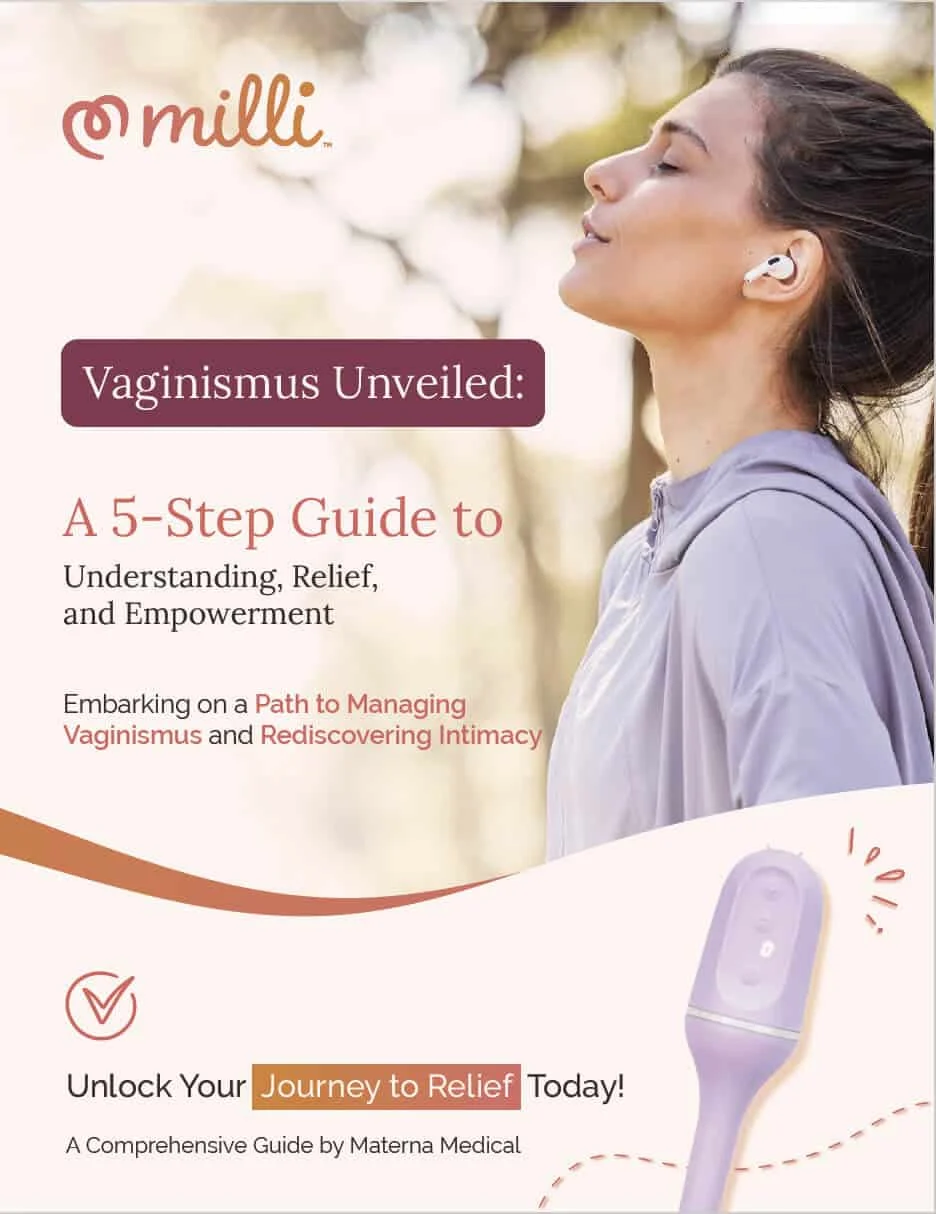
One important thing to know: consistency is a critical factor in how quickly progress happens with dilation therapy. Short, regular sessions over time are more effective than infrequent attempts — which is why how a dilator is designed matters (Wallace et al., 2019). A tool that reduces the physical and emotional stress of each session makes it easier to stay with the process. Milli is a precision-engineered vaginal dilator that expands gradually with patient-controlled precision, eliminating the need to remove and reinsert progressively larger sizes, with optional integrated vibration to support muscle relaxation. It can be used independently at home or alongside pelvic floor physical therapy.
If the idea of penetration feels intimidating right now, that is completely okay. You do not have to jump to anything. Start where you are, take it at your own pace, and know that with the right approach, progress is possible.
“Menopause doesn’t have to mean the end of a fulfilling sex life. With the right mindset, open communication, and the right tools when you need them, intimacy can remain a meaningful part of your life.”
FAQs
Is it normal for sex drive to decrease after menopause?
Yes, very common. Hormonal changes — particularly declining estrogen and testosterone — can reduce sexual desire. Fatigue, mood changes, body image concerns, and stress can all contribute as well. Speaking with your healthcare provider can help identify whether any specific factor is driving the change.
Why does sex hurt after menopause?
Declining estrogen causes vaginal tissue to become thinner, drier, and less elastic, which can make sex painful. In some cases, the anticipation of pain can trigger involuntary pelvic floor muscle tightening — a condition called vaginismus — which compounds the discomfort. Both issues are treatable.
What is vaginismus and can it develop after menopause?
Yes. Vaginismus — involuntary tightening of the pelvic floor muscles that makes penetration painful or difficult — can develop or worsen after menopause, often triggered by the pain cycle that comes from vaginal dryness. It is not a psychological failing; it is a physical response. Our Vaginismus Overview article explains the condition, causes, and treatment options in full.
Can vaginal dilators help with painful sex after menopause?
Yes, when pelvic floor muscle tightness is part of the problem. Dilators help the body gradually become more comfortable with penetration through gentle, repeated exposure at a self-controlled pace. They are most effective when used consistently over time. For a full overview of how they work and what the research shows, see Do Vaginal Dilators Work?.
Do I need a prescription to start dilation therapy?
No. Vaginal dilators, including Milli, are available without a prescription. That said, speaking with your healthcare provider or a pelvic floor physical therapist can help you develop a plan that addresses the full picture — including any hormonal, structural, or psychological factors that may be contributing.
What else can help with intimacy after menopause?
Taking more time with foreplay, using a quality lubricant, communicating openly with your partner, exploring different forms of intimacy beyond penetration, and staying physically active are all approaches that many women find helpful. If pain is a significant barrier, speaking with your provider is a good first step toward identifying the cause and finding the right support.
Sources
- American College of Obstetricians and Gynecologists. (n.d.). When sex is painful. https://www.acog.org/womens-health/faqs/when-sex-is-painful
- Materna Medical. (n.d.). POMPOM clinical study results (Data on file, KEY0054 and supporting references KEY0050–KEY0053).
 About Milli