
How to Support a Partner with Vaginismus: What Helps and What to Avoid

Key Takeaways
- Approximately 75% of women experience painful sex at some point (ACOG, n.d.). Because of the stigma around it, your partner may find it hard to bring up.
- Vaginismus involves involuntary tightening of the vaginal muscles. It is not a choice, and telling someone to “just relax” does not help.
- The most important things a partner can do are listen without judgment, remove all pressure around penetration, and move at their partner’s pace.
- Dilation therapy can be part of a treatment plan when vaginismus is the cause. Consistency is a critical factor in how quickly progress happens — and a supportive partner can make staying consistent feel more achievable.
- Professional support — from a healthcare provider, pelvic floor physical therapist, or sex therapist — can make a meaningful difference for both partners.
Table of Contents
Painful sex is more common than many couples realize. Approximately 75% of women experience pain during or after sex at some point in their lives (ACOG, n.d.). Because of the stigma around this issue, your partner might feel embarrassed, defensive, or hesitant to bring it up. If they have found the courage to tell you something hurts, that conversation matters — and how you respond can make a real difference.
Painful sex can sometimes be related to a condition called vaginismus, which involves involuntary tightening of the vaginal muscles and can make penetration feel painful, impossible, or overwhelming. If your partner is dealing with this, the goal is not to push through pain. The goal is to create safety, reduce pressure, and work together toward a more comfortable path forward.
How Can a Partner Support Someone with Vaginismus?
If your partner has vaginismus, one of the most helpful things you can do is respond with patience, safety, and zero pressure. Vaginismus is not just about penetration being difficult. It can involve involuntary muscle tightening, fear, pain, and stress around intimacy. The best support usually looks like communication, no pressure, and a genuine willingness to move at your partner’s pace.
That means checking in often, stopping when something hurts, and being open to non-penetrative intimacy while symptoms are being addressed. It also means being willing to learn about what your partner is experiencing — and understanding that their pain is real, involuntary, and not a reflection of how they feel about you.
How Painful Sex Affects a Relationship
If neither partner addresses painful penetration, it can quietly affect intimacy, communication, and trust. Some couples avoid sex entirely because they expect pain every time. Others keep trying without a plan, which can increase fear and frustration on both sides.
The healthiest next step is not pretending the pain is normal. It is talking about it openly and deciding together that comfort and safety matter more than forcing penetration. Understanding why painful sex has this effect on desire and intimacy can also help — our article on painful sex and sexual desire explains the neurological connection between chronic pain and low libido, which can be useful for both partners to read.
What Can I Do to Help Make Sex More Comfortable?
While your partner should speak with a healthcare provider to understand what is driving the pain, there are supportive things you can do together at home to make intimacy feel less stressful.
Create Emotional and Physical Safety First
If sex hurts for your partner, focus first on making them feel safe. Ask what feels okay. Check in before and during intimacy. Make it clear that stopping is always allowed — and mean it. Support is not about convincing someone to tolerate more pain. It is about helping them feel safe enough to explore what their body can handle without fear, shame, or pressure.
Partners can also help by slowing things down, using more communication during intimacy, and being open to non-penetrative closeness while symptoms are being addressed. For some people with vaginismus, knowing that penetration is not the goal every time can reduce anxiety and makeprogress easier over time.
Incorporate More Foreplay
Foreplay is about more than setting the mood. It also helps the body prepare for intimacy by increasing arousal and natural lubrication, which can make penetration feel less abrupt or painful (VuvaTech, n.d.). If foreplay is brief, your partner’s body may not have enough time to feel ready.
Try slowing things down and treating foreplay as part of the experience, not just a step before penetration. This alone will not resolve vaginismus, but it can reduce pressure and help your partner feel more at ease.
Use Lubricant
Dryness can make painful sex worse, even when vaginismus is also part of the picture. A quality lubricant can reduce friction and make any kind of touch or penetration feel gentler. Apply it after foreplay, use more when needed, and keep the tone supportive rather than clinical. If something still hurts, pause rather than pushing through.
Other Ways to Support a Partner With Vaginismus
Support can go beyond foreplay and lubricant. Encouraging your partner to speak with a healthcare provider, pelvic floor physical therapist, or sex therapist is one of the most meaningful things you can do. A care team that understands painful penetration can help identify the underlying cause and put together a plan that makes sense for your partner’s specific situation.
Another meaningful form of support is letting your partner stay in control of pace. Some people want to read and learn on their own first. Others want hands-on support and regular check-ins. The most helpful approach respects their comfort level and keeps them in the driver’s seat. Offer to help research options or attend appointments — but only if that is what they want.
Dilation Therapy — and Why Consistency Matters
If vaginismus is the cause of your partner’s painful sex, dilation therapy may be part of the treatment approach. Vaginal dilators work by gradually desensitizing the body to penetration — helping reduce the fear response and muscle tension that sustain the cycle of pain. They are used at home, privately, at a pace your partner controls.
As a partner, your role in this process is not to manage or direct it. It is to support the pace your partner chooses, respect their boundaries, and understand that progress may be gradual. That said, consistency is a critical factor in how quickly progress happens — and having a supportive, low-pressure environment at home makes it easier for your partner to stay consistent with their therapy.
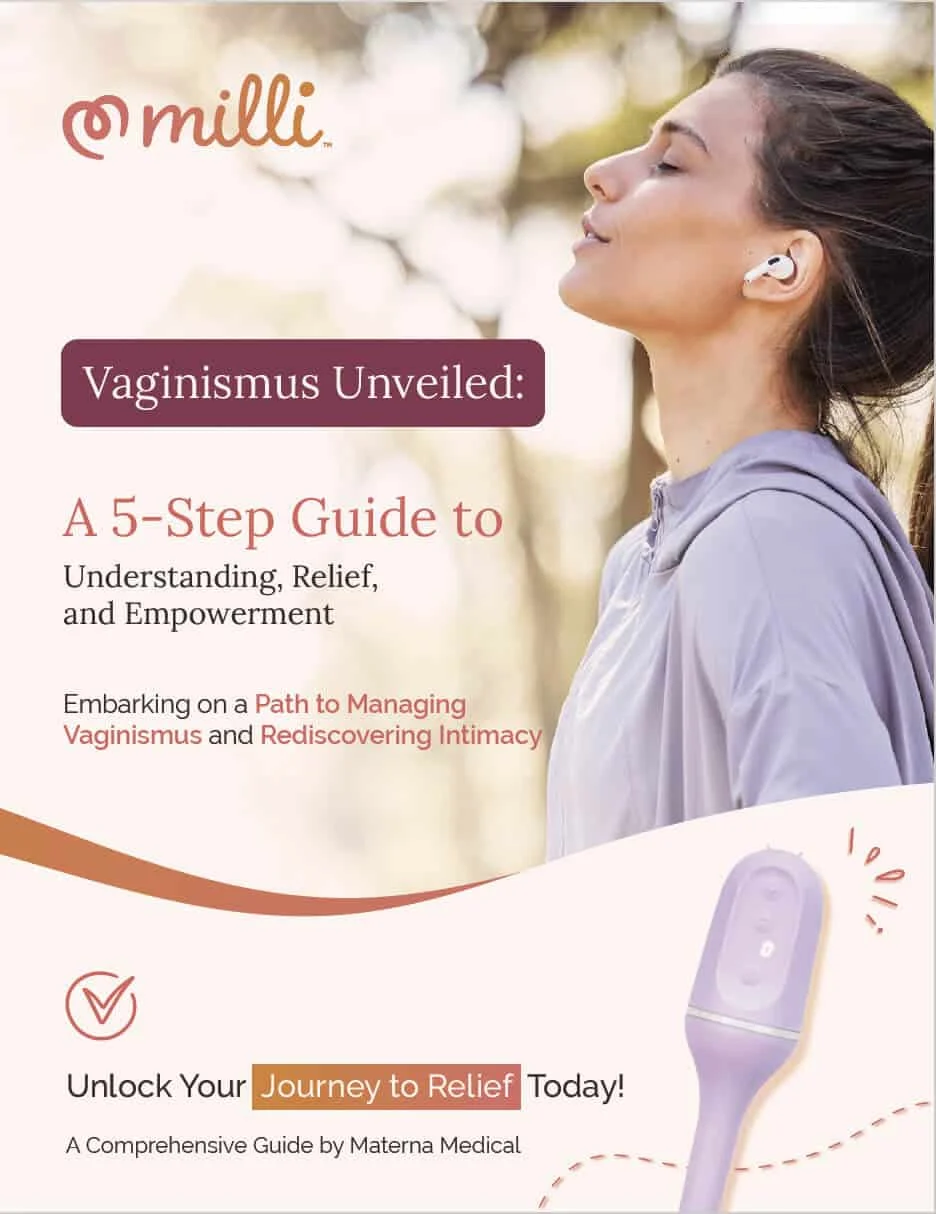
The design of the tool also matters. A dilator engineered to reduce both physical and emotional stress — with gradual, patient-controlled expansion that eliminates the need to remove and reinsert progressively larger sizes — makes the process feel more manageable, which supports staying consistent. Milli is a precision-engineered vaginal dilator built for exactly this: designed for gradual progression with optional integrated vibration to support muscle relaxation. In a recent clinical study of Milli users, 85% made measurable progress toward intercourse within 90 days (Materna Medical, data on file). It can be used independently or alongside pelvic floor physical therapy. For more on how vibration can further support relaxation during therapy, see our article Easing Painful Sex: Discover the Potential Benefits of Vibration Therapy.
“The best support for a partner with vaginismus isn’t finding one perfect trick. It’s creating safety, removing pressure, and helping them move at a pace that feels manageable — so they don’t feel rushed, blamed, or alone.”
What Not to Do If Your Partner Has Vaginismus
Avoid pressuring your partner to just relax, keep going through pain, or try penetration before they feel ready. Even when the intention is encouragement, pressure can make vaginismus worse by increasing fear, muscle guarding, and avoidance. It can also damage trust around intimacy in ways that take time to repair.
It is equally important not to treat painful sex as a relationship failure or a sign that your partner does not desire you. Many people with vaginismus very much want intimacy but feel limited by pain or fear. The goal is to stay on the same team while finding safer, more comfortable ways forward.
Support Checklist for Partners
| What Helps | Why It Matters | What a Partner Can Say or Do |
|---|---|---|
| Open communication | Reduces fear, confusion, and shame around painful sex | “Tell me what feels okay and what does not. We can stop anytime.” |
| More foreplay and lubrication | Helps the body prepare for intimacy and may reduce dryness-related pain | Slow down, check in, and use lubricant without making it feel awkward or clinical |
| No-pressure intimacy | Removes the feeling that penetration must happen every time | Be open to other forms of closeness while symptoms are being addressed |
| Professionalsupport | Helps identify whether vaginismus, pelvic floor dysfunction, dryness, or another issue is involved | Offer to help research options or attend appointments only if your partner wants that |
| Gradual treatment options | Supports step-by-step progress instead of forcing discomfort | Respect your partner’s pace with pelvic floor therapy, relaxation work, or dilator use |
If your partner has vaginismus, the best support is usually not about finding one perfect trick. It is about creating safety, removing pressure, communicating clearly, and helping them move at a pace that feels manageable. Foreplay, lubricant, treatment options, and professional care can all help — but the foundation is making sure your partner does not feel rushed, blamed, or alone.
FAQs
How can a partner support someone with vaginismus?
The most helpful approach is usually patience, communication, and zero pressure. Listen without judgment, check in often, avoid pushing through pain, and support treatment options at whatever pace feels right for your partner. Let them stay in control of the process.
Should I stop trying penetration if it hurts my partner?
Yes. If penetration causes pain, stop and talk about what feels safe instead of pushing through. Continuing through pain can increase fear, muscle tension, and avoidance — making the cycle harder to break over time.
What is vaginismus and why does it cause painful sex?
Vaginismus is a condition in which the pelvic floor muscles tighten involuntarily, making penetration painful or impossible. The tightening is not a conscious choice — it is a physiological response that can be triggered by fear, anxiety, pain history, hormonal changes, or other factors. For a full overview of the condition, its causes, and treatment options, see our Vaginismus Overview article.
Can a partner help with dilation therapy?
Support should follow your partner’s lead. Some people prefer to do dilation therapy privately, on their own schedule. Others appreciate knowing their partner understands the process and is supportive of it. The most helpful role is usually creating a low-pressure home environment where your partner feels comfortable being consistent with their therapy — since consistency is a critical factor in how quickly progress happens.
How do I talk to my partner about painful sex?
Start from a place of curiosity rather than frustration. Ask open questions, listen more than you speak, and make it clear you are not looking for a quick fix. If you both want to understand more about the connection between pain, desire, and intimacy, our article on painful sex and sexual desire covers the neurological and emotional aspects of chronic sexual pain in a way that can be useful for partners to read together.
Are there other resources for understanding painful sex?
Yes. Our dyspareunia symptoms and causes article covers the range of conditions that can cause painful sex and what the diagnostic process looks like. Our do vaginal dilators work? article explains how dilation therapy works and what the research shows. And for partners who want to understand more about rebuilding intimacy, our article on maintaining sexuality after menopause covers approaches to intimacy beyond penetration that apply more broadly.
Sources
- American College of Obstetricians and Gynecologists. (n.d.). When sex is painful. https://www.acog.org/womens-health/faqs/when-sex-is-painful
- VuvaTech. (n.d.). Natural dyspareunia treatment. https://www.vuvatech.com/blogs/vuvagirlblog/natural-dyspareunia-treatment
- Materna Medical. (n.d.). POMPOM clinical study results (Data on file, KEY0054 and supporting references KEY0050–KEY0053).
 About Milli