
Painful Sex and Sexual Desire

Key Takeaways
- Up to 75% of women will experience sexual pain at some point in their lives. The causes are varied — vaginismus, endometriosis, vaginal dryness, pelvic floor dysfunction, and more.
- Sexual pain and sexual desire are deeply connected. When sex hurts, the brain’s pain pathways override pleasure pathways — making low desire, difficulty with arousal, and avoidance of intimacy natural consequences, not personal failures.
- Chronic sexual pain can rewire the brain’s relationship with sex entirely, placing it in the same “danger” category as other painful experiences.
- The first step is to start building a care team — a provider experienced in sexual pain, a pelvic floor physical therapist, and mental health support such as a sex therapist — who can address the cause and help rebuild the connection between sex and pleasure.
- For some women, dilation therapy and vibration support can play a meaningful role in gradually reducing pelvic floor muscle tension and the anxiety around penetration.
Table of Contents
“Sex is not supposed to hurt.” We hear that all the time, but the sad fact for millions of women is that sex does hurt. The American College of Obstetricians and Gynecologists (ACOG) estimates that up to 75% of women will experience sexual pain at some point in their lives. Sexual pain can be caused by many different conditions — including vaginismus, endometriosis, vaginal dryness, painful bladder syndrome, Crohn’s disease, fibroids, scarring from surgery, pelvic floor problems, ovarian cysts, vulvodynia, and healing from birth. The treatment for each of these may differ, but the effects of sexual pain on sexual health and desire are surprisingly universal.
How Sexual Pain Affects Desire and Arousal
Sometimes the relationship between sexual pain and sexual function can seem unclear. Women often describe having no desire for sex or difficulty becoming aroused — but when we look more closely, the primary problem is often sexual pain.
It may come as a surprise to learn that we would not expect someone who has painful sex to have a normal libido or to become easily aroused — in the same way that we would not expect a person to want to put their hand in a fire. It hurts. We know this logically, but it can be hard to connect the dots when we are talking about sex, which carries so much emotional weight alongside the physical.
Women who experience sexual pain are more likely to also experience other sexual challenges: low desire, trouble with arousal, difficulty with orgasm, and vaginal dryness. This is because the pleasure pathways that trigger these responses can be interrupted and overridden by the brain’s pain pathway. Pain is a much louder signal than pleasure, and when it is present, it tends to take over.
How Chronic Pain Rewires the Brain’s Relationship with Sex
When sexual pain is chronic, something more significant can happen: those pain pathways can be rewired completely, changing your relationship with sex even before it begins. The body learns to avoid painful stimuli as a protective mechanism. As biological beings, pain is wired into us as a signal to stay away from things that damage us. When sex is painful repeatedly, the brain places it in that same “danger zone” category — and the pleasurable associations with sex begin to disappear as a result.
This means that when sex is painful, becoming aroused or lubricated becomes harder, orgasm is delayed or absent — especially during the painful aspects, often penetration — and the brain stops signaling desire for an activity it has categorized as harmful.
When there have been repeated negative experiences with sex involving more pain than pleasure, the brain is not going to generate desire to continue those activities. This can lead to avoidance of sex and even intimacy altogether. Women often carry shame, embarrassment, and self-doubt about their sexual pain and their identity as a sexual person — and that emotional weight compounds the physical problem.
This is not a character flaw. It is a neurological and physiological response to an experience that has been painful. Understanding that can be an important first step.
Building the Right Care Team for You
The first step toward regaining control over your sexual health and reclaiming your right to sexual pleasure is finding providers who understand sexual pain. That care team can include any or all of the following:
- A physician or women’s health practitioner who is well-versed in sexual pain and can help identify the underlying cause
- A pelvic floor physical therapist who can address the muscular component of pelvic pain and guide your home practice
- A mental health professional such as a sex therapist or counselor who can support the emotional and psychological aspects of the journey
Treatment for sexual pain depends on the cause and can vary in terms of type and length. Each of these providers will address a different piece of your path toward sexual health. Only once sexual pain is meaningfully improved can you begin to focus on rebuilding the other aspects of desire, arousal, and orgasm.
Reconnecting Pleasure and Intimacy
With appropriate treatment and the support of your care team, you will begin to disconnect sex from the pain-and-danger category and reconnect it with pleasure and enjoyment. This process looks different for every person and often involves patience and ongoing communication with your team and your partner or partners.
During this process, your care team may encourage you to explore sexual activity that does not cause pain — whatever that looks like for you. This could include kissing, erotic touch, nipple play, external clitoral stimulation, or anything else that feels good, is arousing, and does not hurt. The goal is to give your nervous system repeated positive experiences with intimacy, gradually rebuilding the association between sex and pleasure.
The path may be winding, with some setbacks along the way. But you deserve to enjoy pleasurable sex again, and with self-advocacy, the right support, and perseverance, that is possible. If you are looking for practical ideas on rebuilding intimacy and desire, our article Maintaining Sexuality After Menopause: Reclaim Your Intimacy covers a range of approaches that many women find helpful — including communication, solo exploration, redefining intimacy beyond penetration, and more. While written with menopause in mind, much of the guidance applies more broadly to anyone rebuilding their relationship with sex.
When Dilation Therapy and Vibration Support May Help
For women whose sexual pain involves pelvic floor muscle tightness — including conditions like vaginismus, where the muscles tighten involuntarily around penetration — dilation therapy can be a meaningful part of the treatment approach. Our article on dyspareunia symptoms and causes covers the broader landscape of painful sex and how underlying causes are identified, which can help you go into a clinical conversation better prepared.
Dilation therapy works by gradually and gently desensitizing the body to penetration — helping reduce the fear response and muscle tension that can sustain the cycle of pain. Consistency is a critical factor in how quickly progress happens, which is why the design of the tool matters. A tool engineered to reduce physical and emotional stress makes it easier to stay with the process. In a recent clinical study of Milli users, 85% made measurable progress toward intercourse within 90 days. For more on how dilators work and what the evidence shows, see our article Do Vaginal Dilators Work?.
Vibration is another tool that can support this process. Gentle vibration has a calming effect on tight pelvic muscles, may help reduce pain sensitivity, and can make each dilation session feel less stressful and more manageable — which supports the kind of consistent practice that drives progress. In a recent clinical study of Milli users, 57% reported reduced anxiety related to sex after just 3 months of structured therapy. For a deeper look at how vibration therapy works and what the research shows, our article Easing Painful Sex: Discover the Potential Benefits of Vibration Therapy is a good next read.
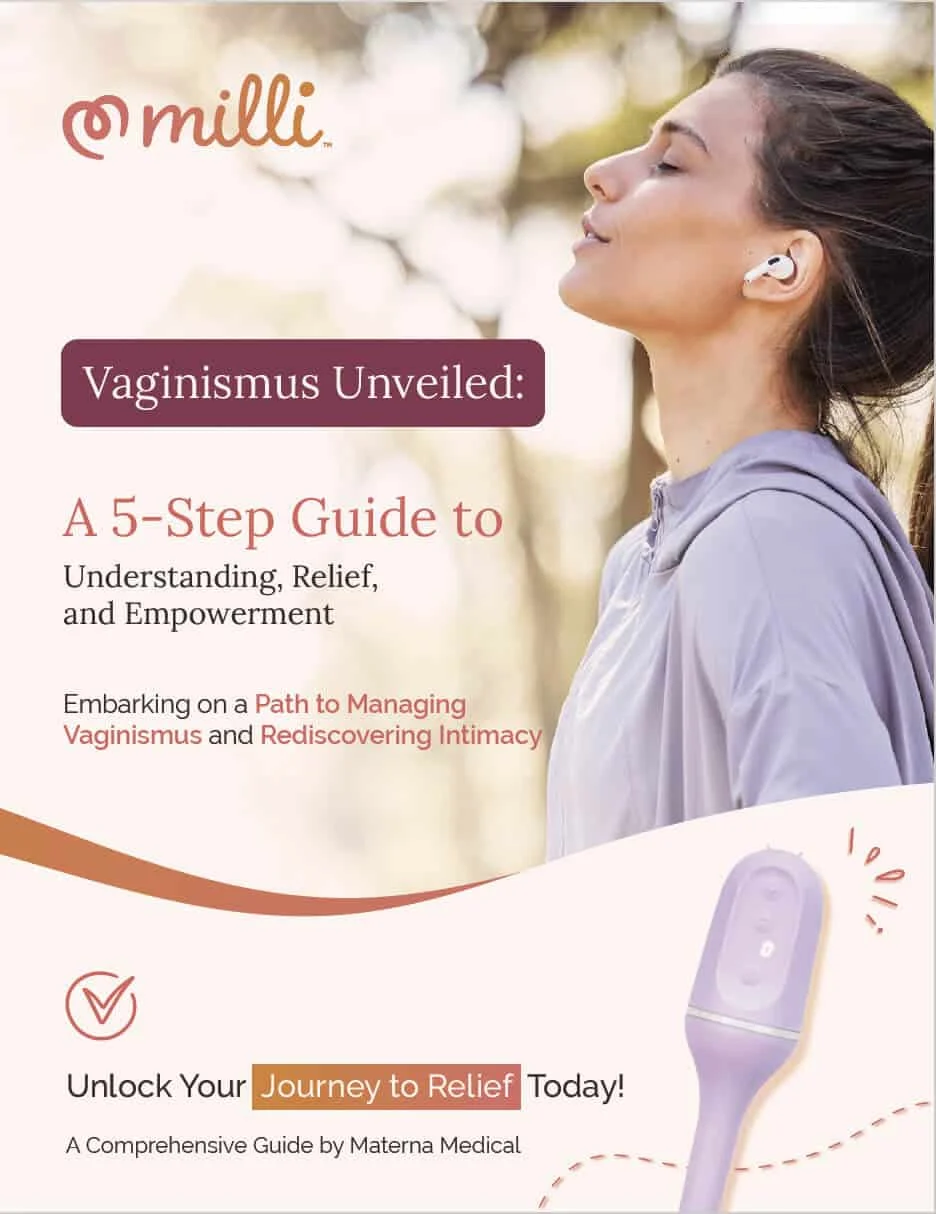
Milli is a precision-engineered vaginal dilator that combines gradual, patient-controlled expansion with optional integrated vibration — designed specifically to reduce the physical and emotional stress of dilation therapy. It can be used independently at home or alongside pelvic floor physical therapy as part of a broader care plan.
“Up to 75% of women will experience sexual pain at some point in their lives — and for many, the impact extends well beyond the pain itself, affecting desire, arousal, and their whole relationship with sex.”
FAQs
Why does sexual pain cause low desire?
When sex is painful, the brain’s pain pathways override the pleasure pathways that generate desire and arousal. Over time, with repeated painful experiences, the brain begins to categorize sex as a threat and reduces the signals that drive desire — as a protective response. Low desire in the context of sexual pain is a neurological consequence of that pain, not a personal failing.
Can sexual desire come back after painful sex?
Yes. With appropriate treatment for the underlying cause of pain and the right support, most women can rebuild their relationship with desire and intimacy. This takes time, patience, and often a care team that includes a provider experienced in sexual pain, a pelvic floor physical therapist, and mental health support such as a sex therapist.
What causes painful sex?
Sexual pain can be caused by a wide range of conditions, including vaginismus, endometriosis, vaginal dryness, pelvic floor dysfunction, vulvodynia, bladder conditions, hormonal changes, and more. Identifying the underlying cause is the starting point for effective treatment. Our article on dyspareunia symptoms and causes covers the diagnostic process in more detail.
What is vaginismus and how does it relate to painful sex?
Vaginismus is a condition in which the pelvic floor muscles tighten involuntarily, making penetration painful or impossible. It can develop in response to repeated painful sex experiences, anxiety around penetration, trauma, hormonal changes, or other triggers. It is one of the more common causes of sexual pain and is treatable with the right approach.
Can dilation therapy help with sexual pain?
Yes, when pelvic floor muscle tightness is part of the problem. Dilation therapy works by gradually desensitizing the body to penetration, helping reduce fear and muscle tension over time. Consistency is important — short, regular sessions tend to be more effective than infrequent attempts. For a full overview, see our article Do Vaginal Dilators Work?.
Does vibration therapy help with painful sex?
Gentle vibration may help reduce muscle tension, improve blood flow, lower pain sensitivity, and make dilation therapy feel more comfortable and less stressful. In a recent clinical study of Milli users, 57% reported reduced anxiety related to sex after 3 months. For more detail, see Easing Painful Sex: Discover the Potential Benefits of Vibration Therapy.
Source
- American College of Obstetricians and Gynecologists. (n.d.). When sex is painful. https://www.acog.org/womens-health/faqs/when-sex-is-painful
 About Milli