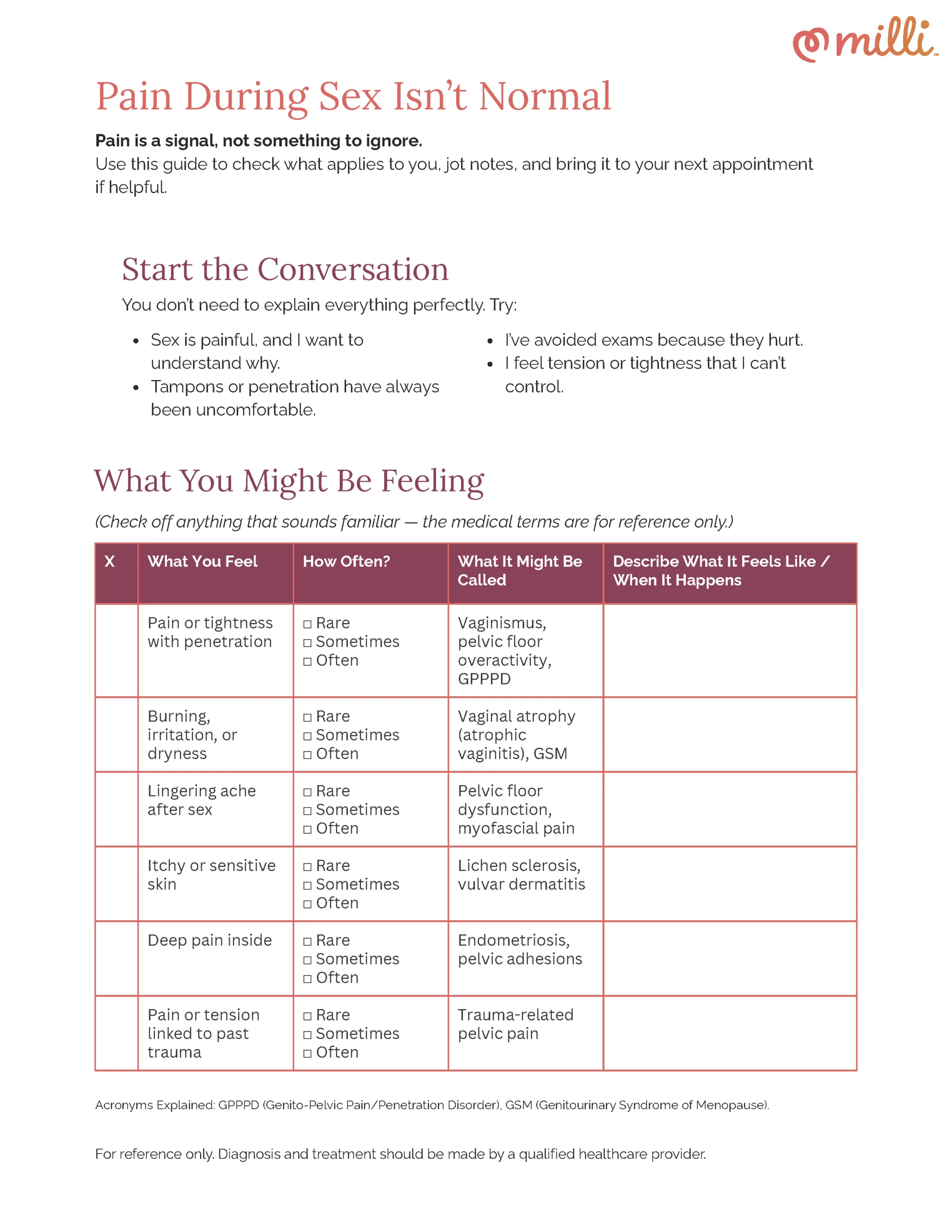

What Is Postpartum Dyspareunia?
Dyspareunia is the medical term for painful sex. Postpartum dyspareunia simply means painful sex after childbirth — and it’s far more common than most women realize. Studies show postpartum dyspareunia is present in over 50% of women at 6–12 weeks after delivery, and up to 32% of women at 12–18 months after delivery. Even a cesarean delivery is not fully protective. Some discomfort early in recovery can be normal while tissues heal and hormones rebalance. But severe pain, pain that persists for months, fear of penetration, or the feeling that sex has become impossible is not something you have to simply accept. This page focuses on one important piece of the picture: when pelvic floor muscle tightening becomes part of the pattern — and what can help.
Why Postpartum Painful Sex Happens
There is rarely one single cause. Several factors can overlap — and understanding which are at play helps guide the right treatment.
Breastfeeding & Hormonal Shifts
Breastfeeding suppresses estrogen release, which can cause vaginal dryness and thinner tissue — making penetration more uncomfortable during this period.
Vaginal Tearing & Scar Tissue
Delivery can injure tissues in and around the vagina. As the body heals, scar tissue may form and make penetrative intercourse uncomfortable or difficult.
Pelvic Floor Changes
Carrying and delivering a baby can leave pelvic floor muscles too tight, too weak, or poorly coordinated — including after a cesarean delivery.
Fatigue, Stress & Emotional Adjustment
The exhaustion and stress of caring for a newborn, along with hormonal shifts and emotional adjustment, are all recognized risk factors for painful sex.

When Postpartum Pain Overlaps With Vaginismus
Postpartum painful sex often starts with something physical — healing tissue, dryness, a perineal tear. But over time, a second layer can develop: the body begins to anticipate pain with penetration, and the pelvic floor muscles start tightening involuntarily in response. That involuntary tightening has a name: vaginismus. Childbirth-related injury, pain, fear, and guarding can all feed into it. What began as healing-related pain can become a self-reinforcing cycle of muscle tension and avoidance. When this overlap is present, treatment may need to go beyond waiting for the body to heal. Pelvic floor physical therapy, breathing and relaxation work, vaginal dilators, and a slower, lower-pressure return to penetration may all help retrain the body’s response to insertion. Recognizing the overlap matters. Early treatment of postpartum pain may help prevent the pattern from becoming more entrenched.
Your Treatment Options
What helps depends on what’s driving the pain. Many women benefit from a combination approach, and a healthcare provider can help you build a plan that addresses the full picture.
Lubrication & Topical Estrogen
Water-based lubricants can reduce friction during sex. When dryness is severe — often during breastfeeding — a healthcare provider may prescribe topical estrogen, estrogen-like medications, or DHEA to help restore tissue comfort.
Pelvic Floor Physical Therapy
A pelvic floor physical therapist can assess muscle tightness, scar tissue, and coordination — and guide exercises that help relax, strengthen, or retrain pelvic muscles contributing to pain.
Dilation Therapy
Dilators can help gently reintroduce penetration and retrain the body’s response to insertion over time. Especially helpful when symptoms overlap with vaginismus or pelvic muscle guarding.
Talk With a Provider or Therapist
Your healthcare provider can help identify what is driving the pain and rule out other contributing conditions. A therapist — including those who specialize in postpartum care — can support work through fatigue, stress, or anxiety connected to intimacy.
Designed for Your Recovery. Built for Real Progress.
Designed to Help You Stay Consistent
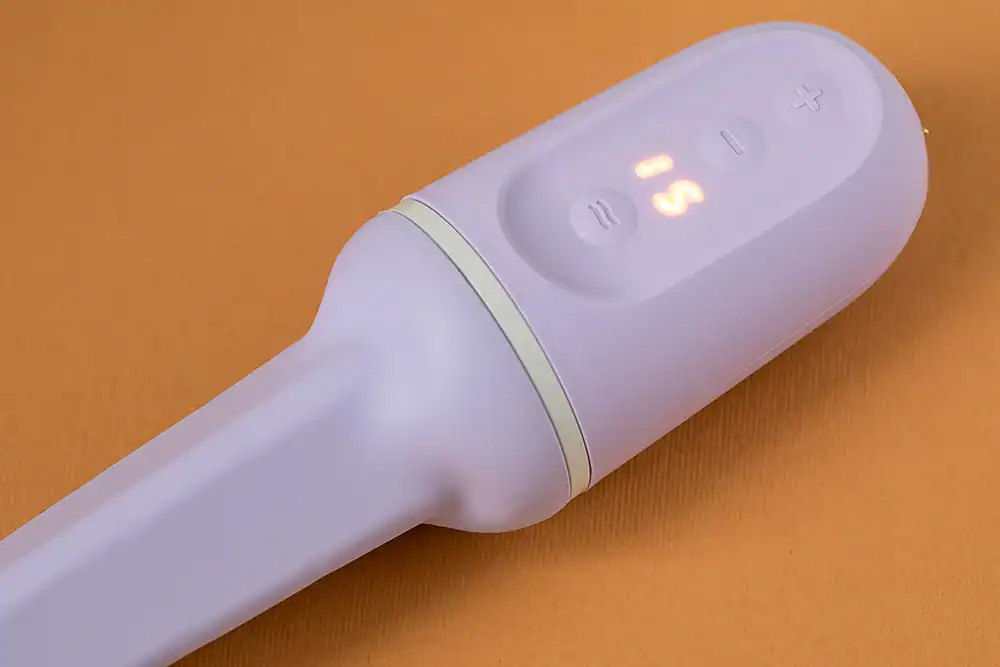
Gradual 1mm expansion eliminates reinsertion — making it easier to continue therapy and see steady progress over time.
Integrated Relaxation Support
Built-in vibration helps muscles relax during dilation — so therapy feels less stressful and more comfortable.
Designed for Her Experience
Less clinical. Less intimidating. Engineered for confidence and control — not the overwhelm of a static set.
Private & On Her Schedule
Practice at home, on your timeline — independently or alongside Pelvic PT.
Proven Outcomes. Real Results.
Designed to support steady, achievable progress for vaginismus — whatever the path that brought you here.
85%
Made meaningful progress towards intercourse after 3 months
33.7mm
Average dilation reached after 6 months
97%
Found Milli easy to use
80%
Used Milli consistently 1-4 days per week at 6 months
Based on a virtual self-reported clinical study of Milli users.
Real Women. Real Progress.

“Milli has helped me gain confidence in my ability to have intercourse again.”Milli Clinical Study Participant

“Much improved. Less pain and developing less fear.”Milli Clinical Study Participant

“It has been very helpful. My husband and I were able to conceive because I started using Milli!”Milli Clinical Study Participant

“It has significantly reduced pain with penetration. I was able to tolerate a vaginal ultrasound without pain or discomfort recently, which was previously extremely painful.”Milli Clinical Study Participant