
Vaginismus and Painful Sex: An Expert Interview with Dr. Sheryl Kingsberg

Key Takeaways
- Vaginismus occurs when pelvic floor muscles tighten involuntarily, making penetration — during sex, tampon use, or a gynecological exam — painful or impossible (Cleveland Clinic, 2024).
- Treatment is highly effective. Studies show success rates of up to 94% when combining Cognitive Behavioral Therapy with dilator use (Correia et al., 2025).
- Consistency is key. Regular, gradual dilator use — at your own pace and without pushing through pain — is what produces results over time (Wallace et al., 2019).
- Vaginismus is under-diagnosed and under-discussed, even among healthcare providers. Many women suffer in silence without knowing treatment is available and effective.
- You can manage treatment independently, on your own schedule. Involving a partner or provider is entirely your choice.
Vaginismus Is More Common Than You Might Think
Vaginismus is a condition that occurs when pelvic floor muscles reflexively tighten, making penetration — whether during sex, tampon use, or a gynecological exam — painful or even impossible painful or even impossible (Cleveland Clinic, 2024). The good news? Treatment is highly effective, and dilators can play a crucial role in helping you find relief.
We spoke with Dr. Sheryl Kingsberg, a leading expert in women’s sexual health, to answer the most pressing questions about vaginismus and its treatment.
Questions & Answers with Dr. Sheryl Kingsberg
What Is Vaginismus?
Vaginismus happens when the muscles in and around the vagina tighten on their own, often triggered by anxiety or fear of pain (Cleveland Clinic, 2024).This can make activities like sexual intercourse, tampon use, or even routine medical exams uncomfortable or painful. For a full overview of the condition — including its causes, types, and the difference between primary and secondary vaginismus — see our Vaginismus Overview article.
Why Do My Muscles Tighten During Sex?
When you’re stressed or anxious, your body may react with a pelvic reflex — where your pelvic floor muscles tighten involuntarily (Cleveland Clinic, 2024). While this is your body’s way of protecting you, it often exacerbates pain during penetration. Understanding that this is a physiological response — not a conscious choice and not something you can simply will away — is an important first step.
Can Vaginismus Be Treated?
Absolutely. Vaginismus is highly treatable. Studies show treatment success rates of up to 94% when combining Cognitive Behavioral Therapy with the use of dilators (Correia et al., 2025). Addressing both the psychological and physical aspects of vaginismus is key to finding relief.
How Do Dilators Help?
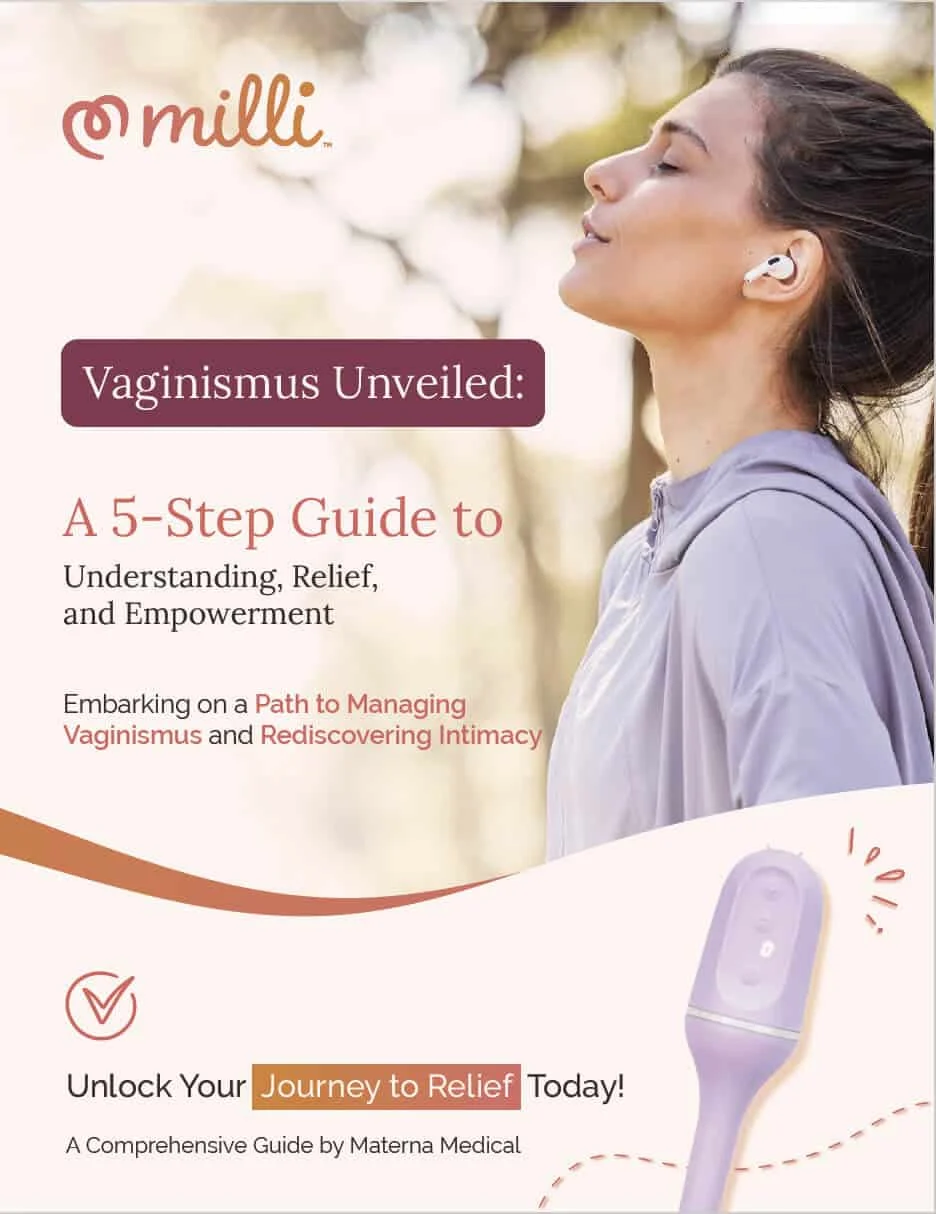
Dilators, like Milli, work by gently stretching the vaginal muscles, reducing the reflexive tightening over time (Macey et al., 2015). What makes Milli unique is its adjustable design — it expands gradually, so you can control your progress at your own pace. Milli also includes an optional vibration feature that many women find helpful in relaxing their muscles, offering a more personalized and comfortable approach compared to traditional, rigid dilator sets. For more on how dilation therapy works and what the research shows, see our article Do Vaginal Dilators Work?.
Will Treatment Hurt?
No — the goal is to avoid pain entirely. Tools like Milli are designed for gradual, pain-free progress, empowering you to stay in control and move only at a pace you’re comfortable with (Macey et al., 2015). Treatment is about teaching your body that penetration does not have to hurt.
How Long Does Treatment Take?
Every journey is unique. While some women see progress within weeks, others may take a few months. Consistency is key — regular use of your dilator will help ensure success (Wallace et al., 2019). For a deeper look at what the timeline typically looks like and what affects it, our article Does Vaginismus Last Forever? addresses this directly.
Do I Need My Partner to Help?
Not at all. Treatment is something you can manage independently. However, if you have a supportive partner, their encouragement may be helpful. That said, this is your journey — involving others is entirely your choice. If you’d like to understand more about how a partner can support you without adding pressure, our article How to Support a Partner With Vaginismus covers this from the partner’s perspective.
Why Haven’t I Heard of Vaginismus Before?
Vaginismus is often under-diagnosed and under-discussed — even among healthcare professionals (Correia et al., 2025). Many women are unaware of the condition, but increasing awareness and resources mean you are not alone in this journey. If you are not sure how to bring it up with your provider, our article on what to ask your doctor when sex hurts gives you the three questions that can open the right conversation.
What Should I Do If I’m Embarrassed to Talk About It?
Feeling hesitant to discuss vaginismus is completely normal. Remember, it is a medical condition and nothing to be ashamed of. If talking to a healthcare professional feels daunting, telehealth options can offer a lower-pressure starting point. You can also begin with at-home dilation therapy — privately, on your own schedule — before deciding whether to involve a provider or pelvic floor physical therapist (Macey et al., 2015).
Why Choose Milli?
Milli stands out as an innovative solution for women with vaginismus. Unlike traditional dilator sets, Milli is adjustable — allowing you to gradually expand its size at your own pace, one millimeter at a time. This personalized approach helps reduce discomfort and ensures you stay in control. The optional integrated vibration supports muscle relaxation during each session, making therapy feel more manageable and less stressful. And because reducing stress is what makes it easier to stay consistent — and consistency is a critical factor in how quickly progress happens (Wallace et al., 2019) — this design difference matters. In a recent clinical study of Milli users, 85% made measurable progress toward intercourse within 90 days (Materna Medical, n.d.). Additionally, Milli is available over the counter, making it easier to begin treatment when you are ready, on your own schedule.
Want to Learn More?
This interview covers the essential questions — but there is a lot more to explore. Here are some of our most useful resources for going deeper on any of these topics:
- Vaginismus Overview — causes, types, diagnosis, and full treatment options
- Pelvic Floor Exercises to Help With Vaginismus — what exercises help and how to combine them with dilation therapy
- Easing Painful Sex: The Potential Benefits of Vibration Therapy — how vibration supports muscle relaxation and what the clinical data shows
- How to Relax Your Pelvic Floor — breathing techniques, stretches, and dilation as complementary approaches
- What to Ask Your Doctor When Sex Hurts — the three questions that help you get the right diagnosis and treatment plan
- Painful Sex and Sexual Desire — why chronic sexual pain affects libido and how to begin reconnecting pleasure and intimacy
About Dr. Sheryl Kingsberg
Dr. Sheryl Kingsberg is a leading expert in women’s sexual health, specializing in female sexual disorders, menopause, and reproductive mental health. As the Division Chief of Behavioral Medicine at University Hospitals MacDonald Women’s Hospital and a Professor at Case Western Reserve University, she has dedicated her career to advancing the treatment of vaginismus and related conditions. Dr. Kingsberg has over 100 peer-reviewed publications and serves on editorial boards for renowned medical journals.
Sources
- Cleveland Clinic. (2024). Vaginismus. https://my.clevelandclinic.org/health/diseases/15723-vaginismus
- Correia, G. N., Driusso, P., & Rodrigues, A. M. (2025). Vaginismus treatment: A systematic review and meta-analysis of contemporary therapeutic approaches. Journal of Sexual Medicine. https://doi.org/10.1093/jsxmed/qdaf295
- Macey, K., Gregory, A., Nunns, D., & das Nair, R. (2015). Women’s experiences of using vaginal trainers (dilators) to treat vaginal penetration difficulties diagnosed as vaginismus: A qualitative interview study. BMC Women’s Health, 15(1), 49. https://doi.org/10.1186/s12905-015-0201-6
- Materna Medical. (n.d.). POMPOM clinical study results (Data on file, KEY0054 and supporting references KEY0050–KEY0053).
- Wallace, S. L., Miller, L. D., & Mishra, K. (2019). Pelvic floor physical therapy in the treatment of pelvic floor dysfunction in women. Current Opinion in Obstetrics and Gynecology, 31(6), 485–493.
 About Milli