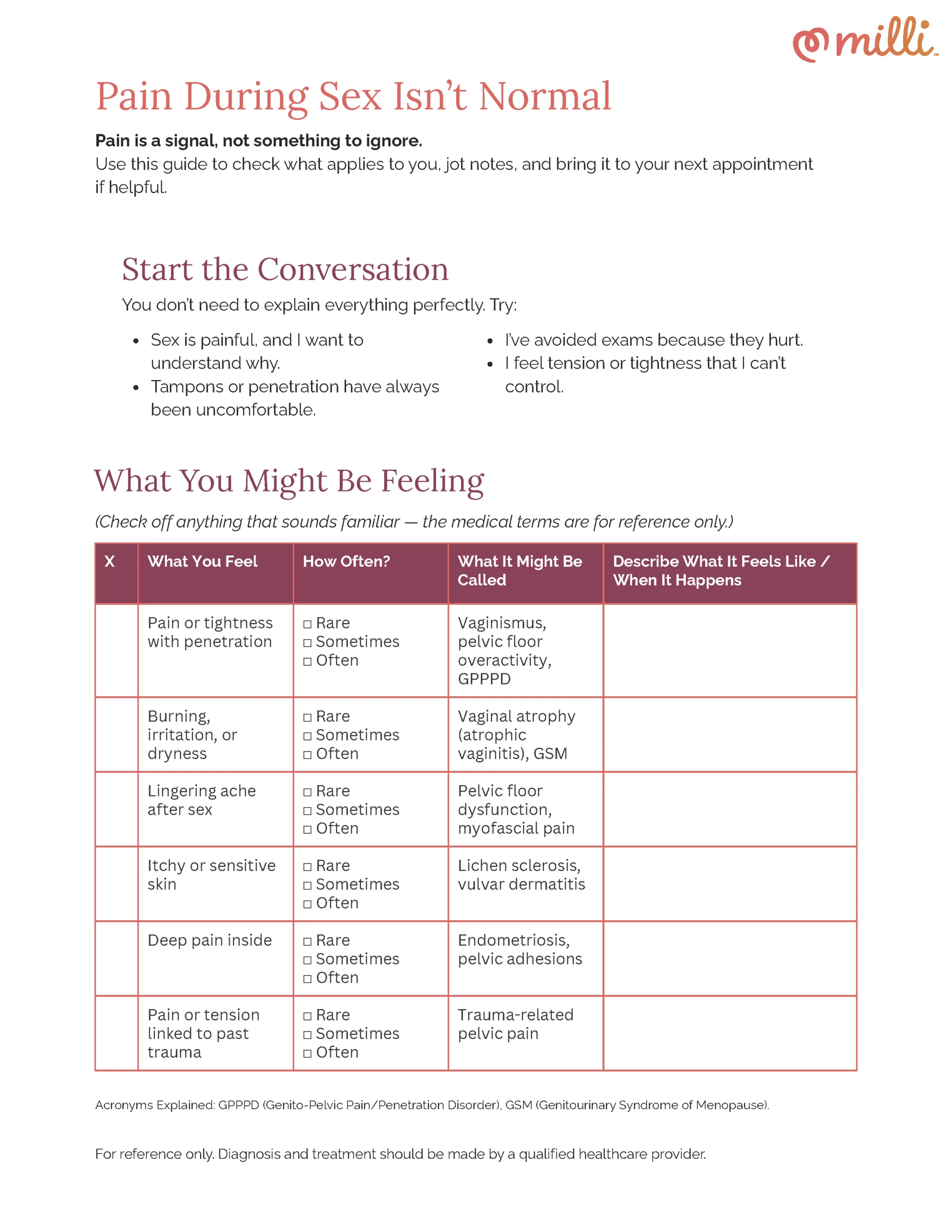
What Is Dyspareunia?
Dyspareunia (dis-puh-roon-ia) is the clinical term for pain with sexual intercourse. It’s a symptom, not a single diagnosis — which means the underlying cause still needs to be identified.
Pain can occur before, during, or after intercourse, and may be felt at the vaginal opening, inside the vagina, or deeper in the pelvis. Where and when it hurts are important diagnostic clues — it can help to write down what you feel and when it happens before a medical appointment.
Painful sex is not something to push through. Forcing penetration when it hurts can increase muscle guarding, fear, and the cycle of pain. A supportive, gradual approach — guided by a provider — is usually more effective.
Identifying the cause is the most important step — because the right treatment depends on what’s driving the pain.
Is Milli Right for Me?
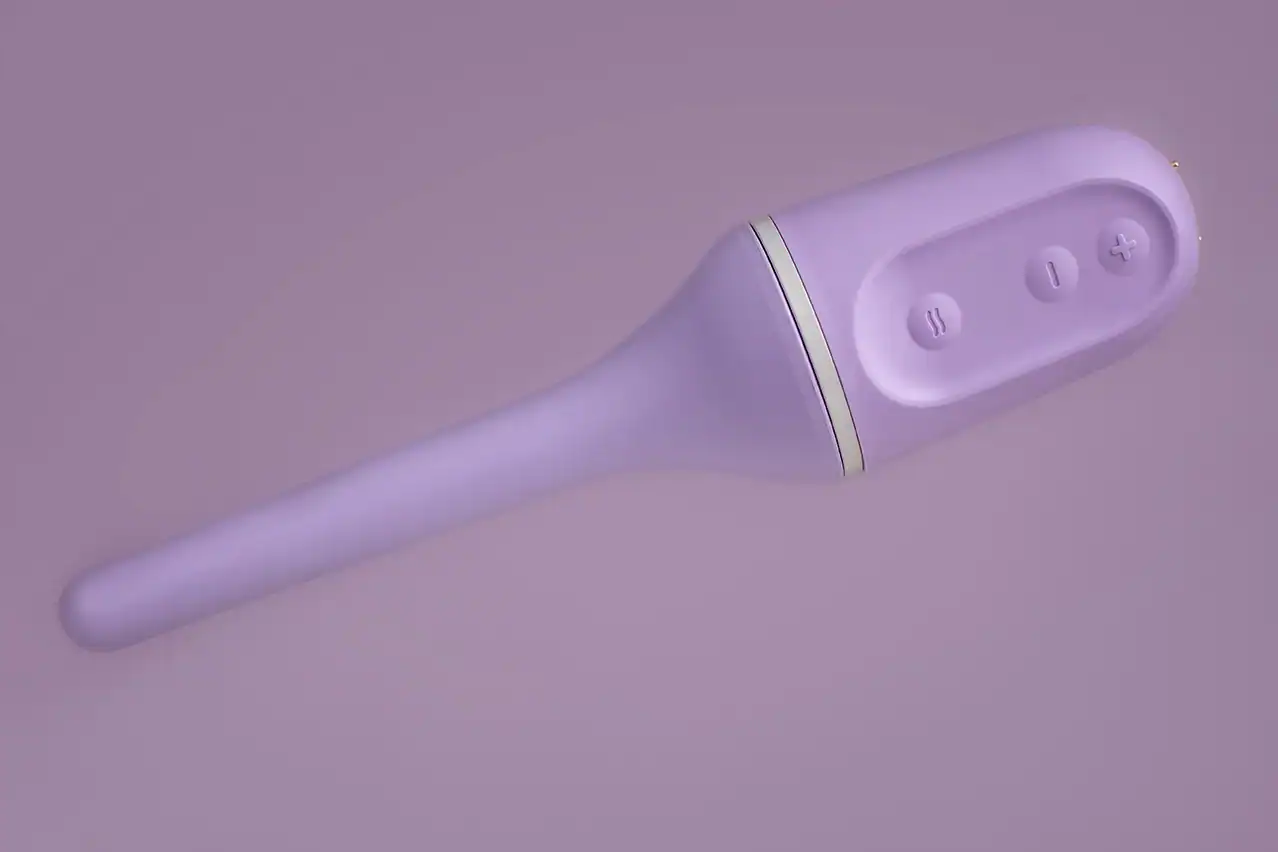
Milli is an FDA-cleared vaginal dilator indicated to help relieve the symptoms of vaginismus — involuntary tightening of the pelvic floor muscles — and the painful sex that can result from it.
Milli is intended for women whose painful sex is related to pelvic muscle tightness. It is not a treatment for painful sex from other causes — such as infections, skin conditions, or structural issues — which require different evaluation and care from a healthcare provider.
If you’re not sure what’s driving your pain, the most important next step is a conversation with your healthcare provider to identify the cause. The sections below can help you understand what those causes might be.
Common Causes of Painful Sex
Dyspareunia can be caused by a wide range of conditions — and the right treatment starts with identifying what’s driving the pain.

Pelvic Muscle Tightness & Vaginismus
Involuntary tightening of the pelvic floor muscles (vaginismus) can make penetration painful or impossible. The muscles may tighten in anticipation of pain, creating a self-reinforcing cycle.

Hormonal Changes & Dryness
Declining estrogen — during perimenopause, menopause, or breastfeeding — can cause vaginal dryness and tissue thinning. Certain medications can also contribute.

Infections & Skin Conditions
Yeast infections, UTIs, bacterial vaginosis, or skin conditions like lichen sclerosus can cause pain with penetration. These typically need medical diagnosis and treatment.

Emotional & Psychological Factors
Stress, anxiety, fear of pain, or past traumatic experiences can contribute to painful sex — often by triggering pelvic floor muscle guarding or reducing arousal.

When Pelvic Muscle Tightness Is Part of the Picture
Even when painful sex starts with another cause — dryness, infection, childbirth, or hormonal change — it can develop a second layer over time. The body begins to anticipate pain with penetration, and the pelvic floor muscles start tightening involuntarily in response.
That involuntary tightening has a name: vaginismus. And once it’s part of the pattern, treatment often needs to go beyond addressing the original cause. In many women, dyspareunia and vaginismus overlap — sometimes one leads to the other, and sometimes both are present from the start.
Pelvic floor physical therapy, vaginal dilators, breathing and relaxation work, and a slower, lower-pressure return to penetration may all help retrain the body’s response to insertion.
This is the specific subset of painful sex that Milli is designed to help with. Recognizing the overlap with vaginismus matters. Early treatment may help prevent the pattern from becoming more entrenched.
Your Treatment Options
Because painful sex has many possible causes, treatment is not one-size-fits-all. A healthcare provider can help identify what’s driving the pain — and many women benefit from a combination of approaches.
Medical Evaluation & Treatment
A provider can rule out infections, skin conditions, hormonal imbalances, or structural issues — and treat them directly. This is often the most important first step.
Lubrication & Hormonal Therapy
Water-based lubricants help reduce friction. When dryness is severe, a provider may prescribe topical estrogen or other medications — especially during perimenopause, menopause, or breastfeeding.
Pelvic Floor Physical Therapy
A pelvic floor physical therapist can assess muscle tightness and coordination — and guide exercises that help relax or retrain the pelvic muscles contributing to pain.
Dilation Therapy
When pelvic muscle tightness or vaginismus is part of the picture, dilators help gently reintroduce penetration and retrain the body’s response over time.
How Milli Supports Therapy for Pelvic Muscle Tightness
Designed to Help You Stay Consistent
Gradual 1mm expansion eliminates reinsertion — making it easier to continue therapy and see steady progress over time.
Integrated Relaxation Support
Built-in vibration helps muscles relax during dilation — so therapy feels less stressful and more comfortable.
Designed for Her Experience
Less clinical. Less intimidating. Engineered for confidence and control — not the overwhelm of a static set.
Private & On Her Schedule
Practice at home, on your timeline — independently or alongside Pelvic PT.

Proven Outcomes. Real Results.
Designed for women with pelvic muscle tightness — including vaginismus — to support steady, achievable progress.
85%
Made meaningful progress towards intercourse after 3 months
33.7mm
Average dilation reached after 6 months
97%
Found Milli easy to use
80%
Used Milli consistently 1-4 days per week at 6 months
Based on a virtual self-reported clinical study of Milli users.
Real Women. Real Progress.

“Milli has helped me gain confidence in my ability to have intercourse again.”Milli Clinical Study Participant

“Much improved. Less pain and developing less fear.”Milli Clinical Study Participant

“It has been very helpful. My husband and I were able to conceive because I started using Milli!”Milli Clinical Study Participant

“The pain is gone. My sex life is much better — and I really AM NOT too old!”Milli Clinical Study Participant